AI toy safety is not a single feature you can check on a box. It is a set of five or six separate design decisions, made by the manufacturer long before the toy reaches a shelf, that together determine what happens the moment your child starts talking to it. Most listings do not spell these decisions out, which is exactly why parents end up comparing marketing language instead of the choices that actually matter.
This guide walks through what AI toy safety actually covers, in plain terms, and gives you a concrete checklist to run through before you buy. Nearly half of parents have already bought or seriously considered one of these toys, so the useful question is no longer whether to look at one. It is what to check first.
What Does "AI Toy Safety" Actually Mean?
AI toy safety covers two very different categories that get discussed as if they were one. The first is physical and chemical safety, the same category that applies to any children's toy: choking hazards, materials, batteries. The second, newer category is conversational and data safety: what the toy is allowed to say, what it records, and where that recording goes. A toy can pass every physical safety test and still fail badly on the second category, which is the part most worth your attention with a toy that talks back.
Does the Toy Have a Camera? Why That Is the First Question
A microphone is required for a toy to hold a conversation. A camera is not, and its presence changes what the toy can collect about your child and your home. Before anything else, confirm whether the toy has a camera, and if a listing does not say clearly, treat that as a reason to ask the brand directly rather than assume the answer is no.
What Happens to a Child's Voice Recordings?
Every conversational toy sends audio to a server to generate its replies, which means a recording exists somewhere outside the toy, even briefly. What varies enormously between brands is what happens next: how long the recording is kept, whether a person ever listens to it, and whether it is used for anything beyond generating that one reply.
In the US, a child's voice recording counts as personal information under the FTC's COPPA rule, and the FTC's 2025 update specifically restricts how companies can monetize children's data. In France, the CNIL's guidance on connected toys sets out similar expectations for what a manufacturer must disclose. Ask a brand three direct questions: how long is audio kept, is any of it reviewed by a person, and is it ever sold or shared with advertisers. A brand that has thought this through will answer plainly and quickly.
Who Controls What the Toy Talks About?
Look for a parent app, not a general promise that the toy is "safe for kids." A parent app that lets you set topics, tone, and whether the microphone listens continuously or only on Push-to-Talk gives you a lever you can actually use. A toy with no such control is asking you to trust the manufacturer's defaults for every conversation your child has with it, with no way to adjust as your child grows or as your comfort level changes.
What Certifications Should an AI Toy Carry?
Certifications will not tell you anything about how the AI behaves in conversation, but they are still worth checking because they cover the physical and chemical side of safety. In the EU, look for CE marking under the EU's toy safety rules. In the US, look for compliance with the ASTM F963 standard, mandatory since April 2024, which the CPSC's toy safety guidance explains in detail. These certifications say nothing about data handling or conversation limits, which is why they are step five on this list, not step one.
What Happens When the Toy Does Not Know the Answer?
This is the question almost nobody asks before buying, and it matters more than any spec sheet. A language model has no built-in sense of not knowing something. Left unconstrained, its default behavior is to produce the most plausible-sounding sentence, which for a child's question can mean a confident, fluent, and sometimes wrong or inappropriate answer.
Independent testers have documented exactly this failure mode. The US PIRG Education Fund's testing of AI-enabled toys and the Fairplay AI Toys Advisory both found toys that carried conversations well past the topics their makers claimed to have fenced off. Neither report endorses any product, ours included. What both make clear is that these were not random glitches: they were the predictable result of shipping a general-purpose model into a toy without hard limits on what it may say, and without a designed way to say "that is a good question for your mum or dad." A toy that declines gracefully at the edge of its knowledge is better designed, not less capable.
Security researchers make a related point from the network side. Kaspersky's analysis of AI toy risks and Proton's review of AI toy safety practices both flag weak default security settings and unclear data flows as recurring problems across the category, independent of any single brand.
AI Toy Safety Checklist: Nine Questions to Ask Before You Buy
| Check | What you are looking for |
|---|---|
| Camera | None, or a clearly disclosed and justified reason for one |
| Microphone control | Push-to-talk option or a clear, adjustable listening mode |
| Topic limits | A stated list of what the toy will not discuss |
| Unknown-answer behavior | A designed fallback, not a guess dressed up as fact |
| Recording retention | A stated, reasonably short retention period |
| Data sale or sharing | Explicitly ruled out in the privacy policy |
| Parent app | Controls you can actually change, not a one-time setup screen |
| Certifications | CE and EN71 in the EU; ASTM F963 and CPSIA in the US |
| Remote shutoff | A way to turn the toy off or mute it from your phone |
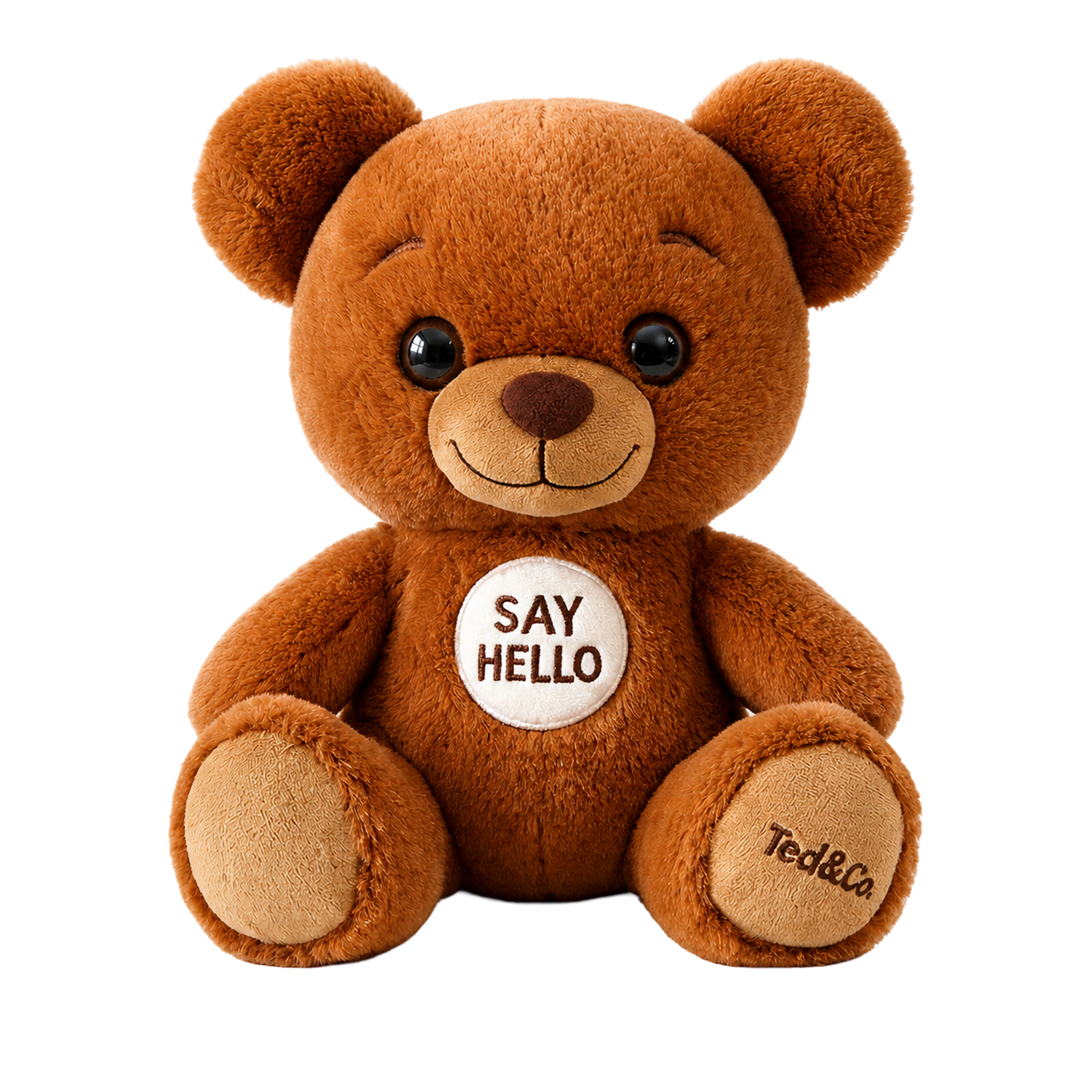
You can run this exact checklist against any brand, including ours. Ted has no camera, offers Push-to-Talk or automatic listening set by the parent, lets you define topics and tone in the app, is certified CE, EN71, ASTM F963 and CPSIA, and carries no subscription or hidden data-sharing terms. Full details are on our security page. For more on the parental controls piece specifically, see what parents can actually set, and for the design philosophy behind the no-camera, no-resale approach, see what privacy by design actually means.
For the fuller research picture on how this category performs overall, our AI toy safety guide goes deeper into the studies behind these checks.
Is an AI Toy Ever as Safe as No Toy At All?
Being honest about limits matters here. No AI toy, including ours, has been independently proven to produce better outcomes than a parent's own attention and judgment, and none should be sold or bought as a replacement for either. The realistic goal of this checklist is not to find a perfect toy. It is to find one where the manufacturer made deliberate, disclosed choices about the handful of things that go wrong most often in this category, rather than shipping a general-purpose AI model into a child's bedroom with no limits at all.
Frequently Asked Questions
What is the single most important AI toy safety check?
Whether the toy has a camera, and what it does when it does not know an answer. Both are design decisions a brand makes before the toy ships, and both are usually disclosed clearly by brands that have thought them through.
Do AI toys record everything a child says?
A conversational toy records audio each time it processes a question, since that is how it generates a reply. What matters is retention period, whether a person reviews it, and whether it is shared or sold, all of which should be stated in the privacy policy.
Are AI toy certifications the same everywhere?
No. The EU and the US use different marks and standards. Look for CE and EN71 in the EU, and ASTM F963 plus a Children's Product Certificate in the US. Neither certification covers conversation safety, only physical and chemical safety.
Can a parent turn off an AI toy's microphone?
On a well-designed toy, yes, either through a physical control or a parent app, and often through a Push-to-Talk mode that keeps the microphone closed unless a button is pressed.
Is it safe to let a young child use an AI toy unsupervised?
Treat it the way you would any device that connects to the internet: fine for stretches of independent play once you have checked the items on this list, but not a substitute for knowing what your child is hearing back.