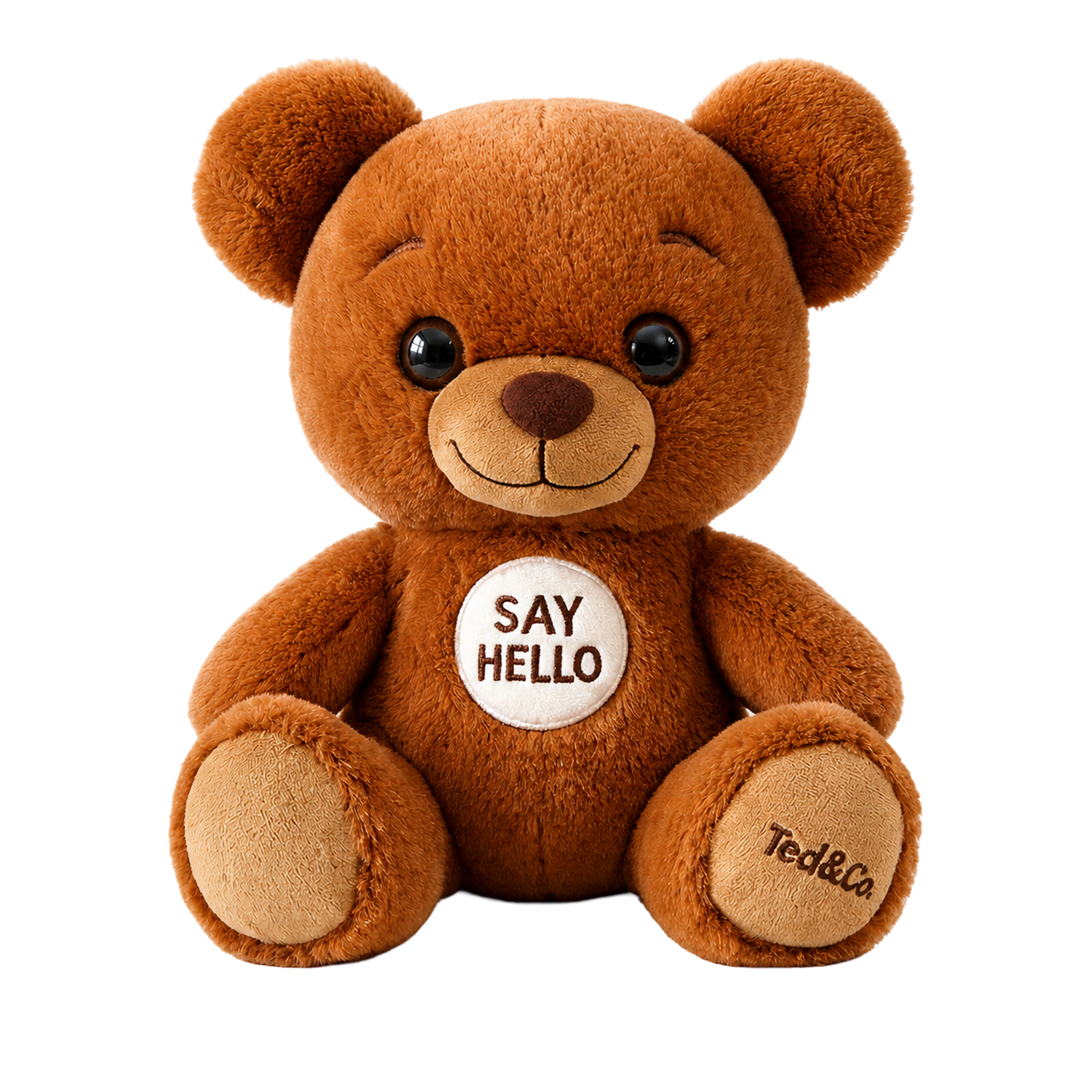
Story boxes and audio players describe themselves as interactive because the child chooses between options. That is a good start. Ted goes further: your child does not choose from a list, they say whatever comes to mind, and the story is built around it.
Three levels of "interactive"
| Type | What the child does | Examples |
|---|---|---|
| Audio player | Picks a recorded story | Yoto, Toniebox, Merlin |
| Choice based story box | Picks from a few elements, then listens | Lunii |
| Conversational teddy | Invents, interrupts, asks questions, and gets answers | Ted |
What a story with Ted sounds like
Your child: "A story about a fox who is scared of the dark." Ted starts. Halfway through, your child adds: "And he has a torch but the batteries are flat!" Ted weaves it in, and asks: "Who do you think could help the fox find new batteries?" Your child answers, and the story goes where they take it. Tomorrow, the fox can come back, or it can be a pirate snail. Your child decides.
Why co-creating matters
Telling a story out loud asks a lot of a young child: finding words, putting events in order, imagining what a character feels. That is exactly the kind of practice that builds language. We explored the research in personalised bedtime stories.
What else to know
- More than 60 languages, set by the parent in the app.
- Two listening modes: automatic listening or push to talk.
- No screen, no camera, and your child's voice is not stored.
- No story packs to buy and no subscription.
- Wi-Fi is required.
Parents stay in control through a mobile app, with guardrails on what Ted talks about.
Compare with the best known story toys
Read our honest comparisons: Lunii, Yoto, Toniebox and Merlin.
Meet Ted, and let tonight's story start with your child.